Data Mining

Introduction :

Arivon Technologies enables to explore the latest trends on DATA MINING and utilize the maximum benefits of this Technology. Please visit www.arivontech.com  for more details. Contact us sales@arivontech.com .

Data mining is defined as the process of extracting information from large set of data. In other ways we can say that data mining is mining knowledge from data.

The extracted information or knowledge can be used for some application are,

  • Production Control
  • Science Exploration
  • Market Analysis
  • Fraud Detection
  • Customer Retention

DATA MINING KNOWLEDGE DISCOVERY:

Here in data mining knowledge discovery we have different type of steps such as,

  • Data Cleaning: In first step, the process removing noise and inconsistent data.
  • Data Integration: In second step, the process of combining multiple data sources.
  • Data Selection: In third step, the process of retrieving relevant data to the task analysis from database.
  • Data Transformation: In fourth step, the process of performing aggregation operations to transformed data into appropriate forms for mining.
  • Data Mining: In fifth step, to extract data patterns we applied intelligent methods.
  • Pattern Evaluation: In sixth step, data patterns are evaluated.
  • Knowledge Presentation: In seven step, knowledge is represented.
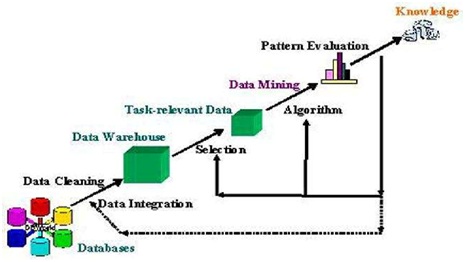
DATA MINING

Fig: diagram for data mining knowledge discovery

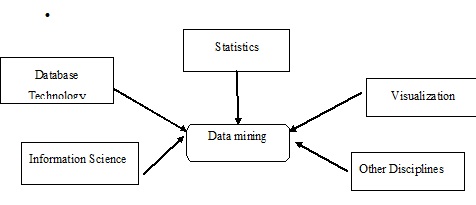
DATA MINING SYSTEM CLASSIFICATION:

Here in data mining system classification we have so types such as,

  • Statistics
  • Machine Learning
  • Database Technology
  • Information Science
  • Visualization
  • Other Disciplines

DATA MINING 1

                                   Fig: diagram for data mining system classification

Data mining is not an easy process, because these algorithms used can get very difficult and data is not available at same place it will available in different places. so it needs to be included from different heterogeneous data sources. These may create some problems. Here in this we have some major issues there such as

  • Mining Methodology and User Interaction
  • Performance Issues
  • Diverse Data Types Issues

Mining methodology and user interaction:

  • Mining different kinds of knowledge in databases
  • Interactive mining of knowledge at multiple levels of abstraction
  • Ad hoc data mining and Data mining query languages
  • Incorporation of background
  • Pattern evaluation
  • Visualization and Presentation of data mining results
  • Handling noisy or incomplete data

Performance Issues:

  • Parallel, distributed, and incremental mining algorithms.
  • Scalability and Efficiency of data mining algorithms.

Diverse Data Types Issues

  • Mining information from different databases and global information systems.
  • Handling of relational and complex types of data.

There are mainly two categories of functions concerned in Data Mining such as Descriptive, Classification and Prediction

 Descriptive Function

It is deals with the common properties of data in the database. Some descriptive functions are

  • Class/Concept Description
  • Mining of Frequent Patterns
  • Mining of Associations
  • Mining of Correlations
  • Mining of Clusters

Class/Concept Description

Class/Concept refers to the data to be associated with the classes or concepts. There are two functions in class/concept description such as

  • Data Characterization: It refers to summarizing data of class under study.
  • Data Discrimination: the process of classification or mapping of a class with some predefined group or class.

Mining of Frequent Patterns

Mining of frequent patterns will occur frequently in transactional data. some frequent patterns are such as

  • Frequent Item Set: this one refers a set of items occurs together frequently.
  • Frequent Subsequence: it refers the sequence of patterns occurs frequently.
  • Frequent Sub Structure: it provides dissimilar structural forms.

Mining of Association

Associations are used in retail sales to identify patterns that are frequently purchased together. The process of detecting the relationship among data and determining association rules.

Mining of Correlations

Correlations is defined as the relations between two item sets to analyze that if they have positive, negative or no effect on each other.

Mining of Clusters

Cluster is defined as it is a process of forming a group of objects that are very similar.

Classification and Prediction

It is the process of finding a model that describes the concepts or data classes. based on the analysis of sets of training data it will derived. It is having different functions such as

  • Classification (IF-THEN) Rules
  • Decision Trees
  • Mathematical Formulae
  • Neural Networks


What is Deep Learning?

Introduction

                Arivon Technologies enables to explore the latest trends on Artificial Intelligence Applications and utilize the maximum benefits of this Technology. Please visit www.arivontech.com   for more details. Contact us sales@arivontech.com  .

AI – Importance of Deep learning

  • Deep learning is a machine learning technique that learns features and tasks directly from data. Data can be images, text, or sound.
  • Deep learning offen referred to as end-to-end learning.
  • Deep learning is a sub-field of machine learning.
  • Deep Learning means using a neural network with several layers of nodes between input and output .

   What is deep learning?

  • Neural networks are a beautiful biologically-inspired programming paradigm which enables a computer to learn from data. These are learning algorithms.
  • Deep learning is a powerful set of techniques for learning using neural networks.
  • Neural networks and deep learning currently provide the best solutions to many problems in image recognition, speech recognition, and natural language processing.
  • If you provide the system plenty of information, it begins to understand it and respond in useful ways.

   How deep learning works?

  • Deep learning is a form of machine learning that uses a model of computing that’s very much inspired by the structure of the brain.
  • Deep Learning is a machine learning It allows us to train an AI to predict outputs, given a set of inputs. Both supervised and unsupervised learning can be used to train the AI.

   Neural networks:

Let’s look inside the brain of our AI.

  • Like animals, our estimator AI’s brain has neurons. These neurons are inter-connected.
  • A method of computing, based on the interaction of multiple connected processing elements.
  • Ability to learn from experience in order to improve their performance.
  • A powerful technique to solve many real world problems.
  • A neural network is a combination of many neurons where the dendrite of one neuron is connected to the axon of other neuron.

Deep learnng pic

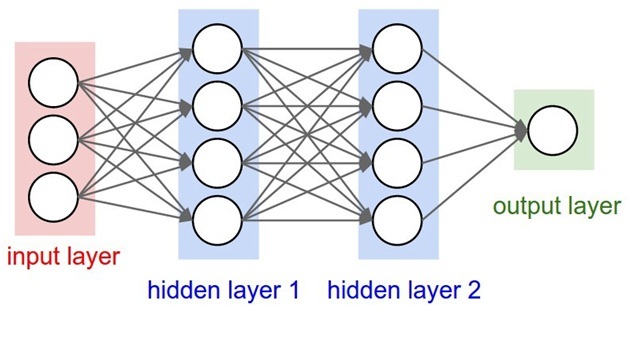
Fig: Different types of layers

The neurons are grouped into three different types of layers:

  1. Input Layer
  2. Hidden Layer(s)
  3. Output Layer
  • The input layer receives input data. The input layer passes the inputs to the first hidden layer. The input layer nodes are passive, doing nothing but relaying the values from their single input to their multiple outputs.
  • The hidden layers perform mathematical computations on our inputs. The main aim of creating the neural networks is to decide the number of hidden layers, in addition to the number of neurons for each layer.
  • The “Deep” in Deep Learning refers to having more than one hidden layer.

Conclusion:

  • Access to more computational power in the cloud, advancement of sophisticated algorithms, and the availability of funding are unlocking new possibilities.
  • Unimaginable just five years ago. But it’s the availability of new, rich data sources that is making deep learning real.
  • Manually designed features are always incomplete and takes more time to design.


Retail Analysis

Retail is the process of selling consumer goods or services to customers through multiple channels of distribution to earn a profit. Retailers satisfy demand identified through a supply chain.

Retail analytics focuses on providing insights related to sales, inventory, customers, and other important aspects crucial for merchants’ decision-making process.

The discipline encompasses several granular fields to create a broad picture of a retail business’ health, and sales alongside overall areas for improvement and reinforcement. Essentially, retail analytics is used to help make better choices, run businesses more efficiently, and deliver improved customer service analytics.

The field of retail analytics goes beyond superficial data analysis, using techniques like data mining and data discovery to sanitize datasets to produce actionable BI insights that can be applied in the short-term.

Moreover, companies use these analytics to create better snapshots of their sales target demographics. By harnessing sales data analysis, retailers can identify their ideal customers according to diverse categories such as age, preferences, buying patterns, location, and more.

Essentially, the field is focused not just on parsing data, but also defining what information is needed, how best to gather it, and most importantly, how it will be used.

By prioritizing retail analytics basics that focus on the process and not exclusively on data itself, companies can uncover stronger insights and be in a more advantageous position to succeed when attempting to predict business and consumer needs.


There are several excellent retail analytics examples that are relevant to a variety of companies. One of the biggest benefits the field delivers to companies is optimizing their inventory and procurement. Thanks to predictive tools, businesses can use historical data and trend analysis to determine which products they should order, and in what quantities instead of relying exclusively on past orders.In addition, they can optimize inventory management to emphasize products customers need, reducing wasted space and associated overhead costs. Apart from inventory activities, many retailers use analytics to identify customer trends and changing preferences by combining data from different areas. By merging sales data with a variety of factors, businesses can identify emerging trends and anticipate them better. This is closely tied to marketing functions, which also benefit from analytics.


Video Content Analytics

           Arivon Technologies enables to explore the latest trends on Video content Analytics Applications and utilize the maximum benefits of this Technology. Please visit www.arivontech.com  for more details. Contact us sales@arivontech.com .

Introduction:

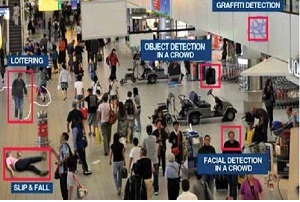
  • Video content analysis is the capacity of automatically analyzing the behavior of the objects in the spot being captured.
  • Video content analytics (VCA) is widely used in security applications in which a video camera is aimed at secure entrances.
  • Many functionalities can be used in VCA for example face detection and Video Motion are one of the simpler forms which is fixed in background scene.
  • Video content analytics is designed to operate with both indoor and outdoor cameras, in a wide range of places involving people, vehicles, and other objects.VCA can even detect camera tampering and failure.

Scope:

This point is aimed at end users and installers allowing for the introduction of VCA technology for the purposes of security, safety, people and traffic management or event counting.

Functionalities of VCA:

Vcn

Fig : Functionalities of Vca

Counting:

count of people or vehicles in and out of a defined area.

Face detection:

It automatically identifies, detect and record faces, also known as Automatic Face Detection .i.e. Gender/race/age determination (from face)

Style detection:

Style detection is used in settings where the video signal has been produced, for example for  television broadcast. Style detection detects the style of the production process.

Video tracking:

Video tracking is used to determine the location of persons or objects in the video signal, possibly with regard to an external reference grid.

 Scalability:

Scalability of the solution plays an important role while deploying video analysis across a chain of retail shops / shopping malls.

Commercial applications:

             Commercial applications like CCTV systems, centralized on dedicated systems or either distributed on the cameras, VCA is implemented.

Working of VCA:

VCA detects moving objects and determines size and length / width ratio of the object. Based on this information we can identify the objects easily. (e.g., human, animal or vehicle).

Also, the color of the object can be determined. If this all meets certain criteria, then the system generates an alarm.

We can also manage operations such as:

  • People counting or crowd control
  • Face recognition
  • Track maintenance.

VCA can be successfully used in a variety of applications:

  • People counting
  • Automatic traffic event and incident detection
  • Safety enhancements for public areas
  • Camera failure

What VCA can do

  • Video can easily identify whether that is a person (tall, short), vehicle or object (large, small).
  • Everything will be recorded for a period of time entering or leaving a zone.
  • Understood the most offerings are the ability to distinguish different types of target – for example vehicles and people – based on characteristic shape, size or motion or a combination of characteristics.


People Analysis

   People analyze-Latest Trends

                  Arivon Technologies enables to explore the latest trends on People analysis and utilize the maximum benefits of this Technology. Please visit www.arivontech.com  for more details. Contact us sales@arivontech.com .

Definition:

  • People analyze means to study or examine someone carefully in a methodical way.
  • People analysis reflects people characteristics pattern of thoughts, feelings, and behaviors.
  • When we observe people around us, one of the first things that strike us is how people are different from one another.
  • Some people are very talkative while others are very quiet.
  • Some are active whereas others are couch potatoes.
  • Some worry a lot, others almost never seem anxious.
  • Every time we are using some words like “talkative,” “quiet,” “active,” or “anxious,” just because to describe different people around us,
  • We are talking about a people analysisthe characteristic ways that people differ from one another.

We had 5 major different types of people around us

  • Openness, conscientiousness, extraversion, agreeableness, neuroticism.
  • To remember these 4 types in a simple way with single word “OCEAN

Openness:

                     This type of people appreciates new ideas, art, values, feelings and behaviors.

Conscientiousness:

                 This kind of people will do hardworking, they will follow rules, they will be careful always, on time for appointments.

Extraversion:

                 This kind of people will be talkative, sociable, and to enjoy others, and some people will b dominant style.

Agreeableness:

                 This people will agree and go along with others rather than to assert one’s own opinion and choices.

Neuroticism:

                 This kind of people frequently experience negative emotions such as anger, worry, and sadness as well as interpersonally sensitive.

Understanding people:

                 When we truly understand people around us then we will becomes successful entrepreneurs, dedicated employees and friendlier colleagues.

We can understand people in 4 different personality types

  • Playful
  • Peaceful
  • Powerful
  • Precise

Playful people:

  • These fellows are enthusiastic, funny, loud, forgiving, easily distracted, creative, & innovators.
  • They are extroverts, who love talking.
  • They speak before they think.
  • They are best at networking, socializing, & having fun.
  • They tend to work fast (or not at all), so they can focus on what they doing.


Traffic Count Analysis

TRAFFIC COUNT-  Methods

                           Arivon Technologies enables to explore the latest trends on TRAFFIC COUNTING Methods and utilize the maximum benefits of this Technology. Please visit www.arivontech.com  for more details. Contact us sales@arivontech.com .

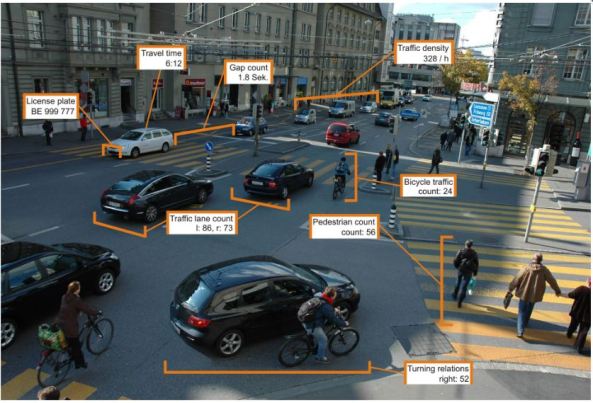
                           A traffic count is a count of vehicles or pedestrians, which is conducted along through road is known as “Traffic Count”.

Types of counting:-

  1. Manual Count:- The count is conducted by persons standing at the roadside and recording passing vehicles on a form, is known as “manual traffic count.
  2. Automation Count:- The count conducted by machines that can record passing vehicles automatically, which are known as “automatic traffic counts”.

Interval of Traffic count:-

  1. Hourly pattern:The way traffic flow characteristic varies throughout the day and night.
  2. Daily Pattern:The day-to-day variation throughout the week.
  3. Monthly and yearly Pattern:The season-to-season variation throughout the year.

Types of vehicles:-

cnt

Fig : Different types of vehicles

  1. Car:-
  • Number of Axles: 2.
  • All Sides Glasses: Front Side, Back Side, Driver Left Side, Driver Right Side, Passenger Left Side (Behind Driver), Passenger Right Side (Behind Driver).
  1. LGV:-
  • Number of Axles – 2 or 3.
  • Capacity – Less than 3.5T.
  • Back to Driver – No Glasses and No Windows.
  • Vehicle with Embedded trolley.
  • Front Glass (Driver Glass) – Slope.
  • Back side Glass – Yes or No.
  • Driver’s Left, Right and Front side Glasses will be there.
  1. OGV1:-
  • Total Number of Axles – 2 or 3.
  • Front Glass – Slope or Flat.
  • Capacity – More than 3.5T.
  • Back Tyre – May be Hollow.
  1. OGV2:-
  • Number of Axles – More than 3 Axles.
  • No Flat or Slope concept.
  1. Bus:-
  • All Sides Glasses.
  • Bigger Windows with more than 16+ Passengers.
  1. Motor Cycle:-
  • 2 Wheeler with Motor.
  1. Cycle:-
  • 2 Wheeler with Pedal.

Uses:-

  • By counting we can identify the hourly distribution of vehicles at peak hour.
  • We can improve controlling traffic.
  • We can track the route taken by vehicle

Video Analytics Applications

Introduction

              Arivon Technologies enables to explore the latest trends on Video content Analytics Applications and utilize the maximum benefits of this Technology. Please visit www.arivontech.com  for more details. Contact us sales@arivontech.com .

                   Video Analytics is also called as VA is the method of analyzing the video and it enables the video surveillance system to initiate the further actions based on video analytics  Some of the applications in which video content analytics is helpful in finding the intruders and  analyse  people movements , camera tampering detection, Vehicle Movements, License plate recognition, Facial recognition, object tracking, Zone movement,Shopping analysis, Passenger analysis ,sports.

                                                  video anly

                                           Fig: Camera tampering detection

Let us see how the video content analytics is helpful in  the mentioned applications in detail:

People counting system :  It is used to count the number of people moving in a particular direction. This would be useful to locate traffic violation. There are four main reasons to consider the people counting is to measure traffic, evaluate promotions, monitor traffic flow, optimize labor needed based on customer /visitor volume. Based  on the video, number of people visiting to that section can be identified.

Camera tampering detection: If some intruder enters into shop or to some section and if he covers the camera with an opaque sheet or just if covers the lens of the camera, the IP camera can detect them and send the alert messages to the owners.

Digital fencing: The digital fencing can also be called as cross-line detection. If any intruder crosses the restricted line then the messages will be notified. These kind of software mainly used in the boundary wall of the company monitored by IP cameras if any person crosses this boundary then it will be notified to the owner.

License plate recognition: IP cameras can recognize the number plate of the vehicle so that the vehicles parked in the no parking area and if some vehicles violate the traffic rules then that vehicle number will be recognized by the camera such intruders can be identified.

Facial recognition:  Surveillance system can recognize if the face matches any of the faces already stored in the databases.  This could help in the access control, automatic attendance updating, locating a fugitive in a public place etc.

Object tracking:  In this method we can zoom and track a vehicle or any intruder entering into the factory, company or any places and records the movement of activities.

 Zone movement:  In this method the camera will record the movement of the object in a particular zone and notifies the message if any intruder enters into that restricted section.

                   In same way the video content analytics will be used in banks, railways/metro station, airports, parking management, stadiums, perimeter intrusions for critical infrastructures, vehicle monitoring on roads.

Why the Internet applications change day by day ?

Current world of Internet Applications

                      Arivon Technologies enables to explore the latest trends on Internet Applications and utilize the maximum benefits of this Technology. Please visit www.arivontech.com  for more details. Contact us sales@arivontech.com .

Internet Applications

                       It is a network of networks that consists of millions of private, public, academic, business, and government networks, of local to global scope, that are linked by a broad array of electronic, wireless and optical networking technologies. The Internet carries an extensive range of information resources and services, such as the inter-linked hypertext documents of the World Wide Web (WWW) and the infrastructure to support email.

                       We can roughly separate internet applications into the following types: online media, online information search, online communications, online communities, online entertainment, e-business, online finance and other applications. The internet is treated as one of the biggest invention. It has a large number of uses.

inter app

                           Fig : Applications for internet

  1. Communication
  2. Job searches
  3. Finding books and study material
  4. Health and medicine
  5. Travel
  6. Entertainment
  7. Shopping
  8. Stock market updates
  9. Research
  10. Business use of internet

Why the Internet Applications change day by day

                       Information technologies have wrought fundamental change throughout society, driving it forward from the industrial age to the networked era. In our world, global information networks are vital infrastructure—but in what ways has this changed human relations? The Internet has changed business, education, government, healthcare, and even the ways in which we interact with our loved ones—it has become one of the key drivers of social evolution. The changes in social communication are of particular significance. Although analogue tools still have their place in some sectors, new technologies are continuing to gain ground every day, transforming our communication practices and possibilities—particularly among younger people. The Internet has removed all communication barriers. Online, the conventional constraints of space and time disappear and there is a dizzyingly wide range of communicative possibilities. The impact of social media applications has triggered discussion of the “new communication democracy.”

                       The development of the Internet today is being shaped predominantly by instant, mobile communications. The mobile Internet is a fresh revolution. Comprehensive Internet connectivity via smart phones and tablets is leading to an increasingly mobile reality: we are not tied to any single specific device, and everything is in the cloud.

DATA ANALYTICS

   DATA ANALYTICS

Introduction

                      Arivon Technologies enables to explore the latest trends on DATA ANALYTICS and utilize the maximum benefits of this Technology. Please visit www.arivontech.com  for more details. Contact us sales@arivontech.com .


 data pic

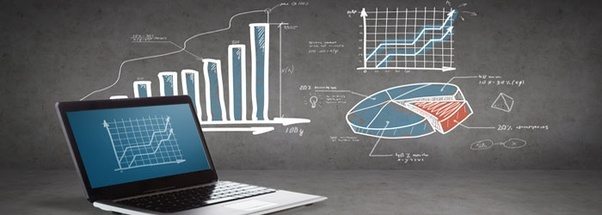
                                            Fig : Data Analysis

DATA ANALYTICS (DA) :          

Analytics is the discovery of meaningful patterns in dataData analytics is used for increase productivity and business gain. This is conducted in business to consumer applications. Data is extracted to analyze behavioral data, patterns and techniques. Data analytics is also called as data analysis.

SOFTWARE USED FOR DATA ANALYSIS:

data sof 1

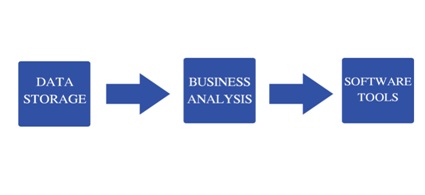
Fig : Software tools for Data analysis

  1. Rapid Miner
  2. Shogun
  3. Weka Data Mining
  4. Orange Data mining.
  5. Data Melt.
  6. Microsoft R
  7. R Software Environment

 1 .RAPIDMINER:

Rapid Miner is capable of manipulating, analyzing and modeling data. Rapid Miner makes data science teams more productive. Its unified data science platform. It speed up the building of complete analytical workflows  from data prep to machine learning to model validation to deployment  in a single environment.

2 .SHOGUN:

Shogun is a open source toolbox. It is always written in C++. It gives data structures for machine learning problems.

                  Focus : On kernel machines/support vector machines for regression problems.

3 . WEKA DATA MINING:

Weka is open source software which is a group of machine learning algorithms which is used for data mining tasks. The algorithms are applied to a data set.

4 . ORANGE DATA MINING:

                    Orange is open source data analysis. It gives interactive workflows to analyse data. Orange is load with different visualizations, from scatter plots, bar charts, trees, to dendrograms, networks and heat maps.

5 . DATAMELT:

Data Melt, is an environment for data analysis and data visualization. It is designed for analysis of data mining, statistical analyses and math computations. It can be used with different programming languages. Data Melt is not limited by a single programming language. Data analysis and statistical computations can be done using high-level scripting languages like Python as well as a lower-level language such as JAVA.

6 . MICROSOFT R:

This is the most widely used statistics software. The installation of many packages include R packages released by Microsoft Corporation to further enhance your Microsoft R which is Support for Windows and Linux-based platforms.

7 . R SOFTWARE ENVIRONMENT:

                    This is written in C.Lot of its modules are written in R. It’s a free software programming language. The R language is widely used among data miners for data analysis.

TYPES OF DATA ANALYTICS APPLICATIONS:

1 . Exploratory Data Analysis (EDA):

                                                To find patterns and relationships in data.

2 . Confirmatory Data Analysis (CDA):

Statistical techniques to determine whether thesis about a data files are true or false.

USES:

1 .Data analytics technologies are mostly used in commercial industries to enable organizations to increase revenues, operational efficiency, productivity and business gain.

2 . DA is used by scientists and researchers to verify or prove false scientific models, theories and hypotheses.


Face Recognition

Artificial Intelligence – FACE RECOGNITION

                         Arivon Technologies enables to explore the latest trends on Artificial Intelligence – FACE RECOGNITION and utilize the maximum benefits of this Technology. Please visit www.arivontech.com  for more details. Contact us sales@arivontech.com .

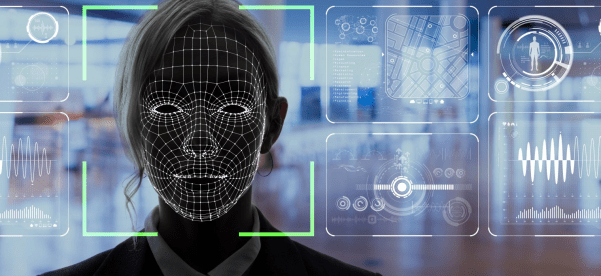
It is used to identify a person by recognition his face. Now a days we are using Software to automate the process in systems. Those are several types, those are given below.

  • Recognition from outdoor facial images.
  • Recognition from non-frontal facial images.
  • Recognition at low false accept/alarm rates.
  • Understanding why males are easier to recognize than females.
  • Greater understanding of the effects of demographic factors on performance.
  • Development of better statistical methods for understanding performance.
  • Develop improved models for predicting identification performance on very large galleries.
  • Effect of algorithm and system training on covariate performance.
  • Integration of morphable models into face recognition performance.
  • Understanding the video sequences in FRVT 2002 did not improve performance.
  • Face recognition are using for government departments to easy their daily day process.
  • Face recognition are using for security lock purpose also.doc f

How Facial Recognition Systems Work

                          Anyone who has seen the TV show “Las Vegas” has seen facial recognition software in action. In any given episode, the security department at the fictional Montecito Hotel and Casino uses its video surveillance system to pull an image of a card counter, thief or blacklisted individual. It then runs that image through the database to find a match and identify the person. By the end of the hour, all bad guys are escorted from the casino or thrown in jail. But what looks so easy on TV doesn’t always translate as well in the real world.

In 2001, the Tampa Police Department installed police cameras equipped with facial recognition technology in their Ybor City nightlife district in an attempt to cut down on crime in the area. The system failed to do the job, and it was scrapped in 2003 due to ineffectiveness. People in the area were seen wearing masks and making obscene gestures, prohibiting the cameras from getting a clear enough shot to identify anyone.

Boston’s Logan Airport also ran two separate tests of facial recognition systems at its security checkpoints using volunteers. Over a three month period, the results were disappointing. According to the Electronic Privacy Information Center, the system only had a 61.4 percent accuracy rate, leading airport officials to pursue other security options.

Humans have always had the innate ability to recognize and distinguish between faces, yet computers only recently have shown the same ability. In the mid 1960s, scientists began work on using the computer to recognize human faces. Since then, facial recognition software has come a long way.