What is behaviour analysis?

Artificial Intelligence -Behavioral analysis:

          Arivon Technologies enables to explore the latest trends on Artificial Intelligence -Behavioral analysis and utilize the maximum benefits of this Technology. Please visit www.arivontech.com  for more details. Contact us sales@arivontech.com .

Definition:

  • Behavior analysis is the science of behavior. Its underlying philosophy is behaviorism, which is based upon the principle that attempting to improve the human condition through behavior change.
  • Behavior analysis is a natural science that seeks to understand the performance of individuals.
  • Behavior analysts study how biological factors influence the behavior of humans and nonhuman animals.
  • Most behavior problems fall into one of two categories
  • Behavior that doesn’t occur enough
  • Behavior that occurs too much

Examples of behavior analysis:

  • Teachers may complain that their students
  • Walk around the room too much
  • Fight too much
  • Bunking classes
  • If students are not doing work properly in time.

There are two major areas of behavior analysis: experimental and applied.

  1. Experimental behavior analysis involves basic research designed to add to the body of knowledge about behavior.
  2. Applied behavior analysis, on the other hand, is focused on applying these behavior principles to real-world situations.

Techniques and Strategies Used In Behavior Analysis:

Chaining:

  • This behavior technique involves breaking a task down into smaller works. This is the easiest way or first task in the process is trained first. After learning the first task, the next task can be taught. This process continues until the whole chain is successfully chained together.

 Prompting:

  • This approach involves using some type of prompt to trigger a desired response. This might involve issues a verbal indication, such as telling the person what to do, or a visual cue, such as displaying a picture designed to sign the response.

Principles:

  • Educational Skills such as reading, writing.
  • Language Skills such as requesting, labeling and conversation.
  • On a daily basis activities skills such as eating, meal preparation and doing laundry.
  • Coping skills such as emotional regulation and self-monitoring.
  • society skills such as walking in a store, shopping, sitting in a restaurant, ordering a meal, and street safety skills
  • Community skills such as building relationships, interacting with peers, building play with others, sibling play and learning proper social rules.
  • Creative skills such as art, picture and learning a music instrument.
  • Technical skills such as using a computer, surfing the internet and computer based activities such as image art design.
 

Website development

     Arivon Technologies enables to explore the latest trends on WEBSITE DEVELOPMENT SERVICES and utilize the maximum benefits of this Technology. Please visit www.arivontech.com  for more details. Contact us sales@arivontech.com .

Introduction:

            Nowadays each & every businessperson  have  website for their own business. So website development is playing one of  the major role in IT Technologies.

Web development is also known as ‘website development’.

  • A website development is the process of

wsd

PROGRAMMING  LANGUAGES USED FOR WEBSITE DEVELOPMENT:

SL.NO LANGUAGES USED BY
1 Javascript all web browsers,
2 Python Django framework. This is used in a lot of mathematical calculations
3 Ruby Ruby on Rails framework
4 PHP WordPress

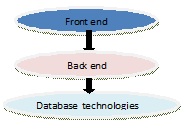
 FRONT END TECHNOLOGIES:

  • A front end technologies are done by front end developers as the process of desiging  by the using :

1)HTML,CSS&JAVASCRIPT:

      a)HTML:

  • Hyper Text Markup Language
  • It is used to create web pages.
  • Web browser will render the HTML elements from webserver based on HTML documents.
  • HTML element is called as  HTML tags such as <h1>,<h6>,<body>,<head>,<title>,<br>,<div>,<p>,<b>

       b)CSS :

  • Cascading  Style  Sheets:
  • It is used to styling the HTML(to specify the layout of webpage)
  • It can be style in Three ways:

                i)Inline Style (giving style within the tags)

                ii)Internal Style (Giving Style within in the HTML Document with the style tag)

                iii) External Style(Creating separate file and calling in html with the link tag)

  C)JAVASCRIPT AND JQUERY:

  •  Within the web content development, by using various CMS products.
  •  With client side programming as scripting languages (JavaScript and jQuery).
  •  Jquery is a library functions of JavaScript which reduces the effort of developer.

           we have many frameworks by which having the combinations of all the above ( HTML,CSS AND JAVASCRIPT& JQUERY)

BACK END TECHNOLOGIES:

  • A backend technologies are done by backend developer, as their process in mentioned below,

1)SERVER SIDE LANGUAGE:(Such as PHP, Ruby, Python and Java) & Database technologies is RDBMS such as Sql, etc to maintain the database.

2)HOSTING WEBSITE:

  • Web hosting is a service that allows organizations and individuals to post a website or web page onto the Internet.
  • A web host or web hosting service provider  is a business that provides the technologies & services needed for the website to be viewed in the Internet.
  • Websites are stored on special computers called servers.
  • When Internet users want to view your website, all they need to do is type your website address.
  • Their computer will then connect to your server & your WebPages will be delivered to them through the browser.
  • Most hosting companies require that you own your domain in order to host with them.
  • If you do not have a domain, the hosting companies will help you purchase one.

WEB DEVELOPMENT TOOLS:

  • Sublime Text
  • Chrome Developer Tools,
  • JQuery,
  • GitHub,
  • Twitter Bootstrap,
  • Angular.js,
  • Sass


What is Machine learning?

               Arivon Technologies enables to explore the latest trends on Machine Learning Applications and utilize the maximum benefits of this Technology. Please visit www.arivontech.com   for more details. Contact us sales@arivontech.com .

Artificial Intelligence-Importance of Machine Learning:

               Machine learning is A branch of artificial intelligence, concerned with the design and development of algorithms that allow computers to evolve behaviors based on empirical data. As intelligence requires knowledge, it is necessary for the computers to acquire knowledge.

Ml

               It is very difficult to categorize to all the decisions based on all possible inputs. So to solve this problem, algorithms are developed. These algorithms are developed based on specific data and  past experience with the principles of statistics and probability theory , logic ,search.

The developed algorithms form the basis of various applications such as:

  • Vision processing
  • Language processing
  • Forecasting (e.g., stock market trends)
  • Pattern recognition
  • Games
  • Data mining
  • Expert systems
  • Robotics

SOME MACHINE LEARNING METHODS

                Machine learning algorithms are often categorized as

  • Supervised machine learning algorithms
  • unsupervised machine learning algorithms 
  • Semi-supervised machine learning algorithms
  • Reinforcement machine learning algorithms

Supervised machine learning algorithms:

             Supervised learning deals with learning a function from available training data. A supervised learning algorithm analyzes the training data and produces an inferred function. Some common examples are,

  • classifying e-mails as spam,
  • labeling web pages based on their content, and
  • voice recognition.

             There are some supervised algorithms such as neural networks, Support Vector Machines (SVMs), and Naive Bayes classifiers.

Unsupervised machine learning algorithms:

              Unsupervised learning is an extremely powerful tool for analyzing available data and look for patterns and trends. It is most commonly used for clustering similar input into logical groups. There are some common approaches such as,

  • k-means
  • self-organizing maps, and
  • hierarchical clustering

Semi-supervised machine learning algorithms:

             Semi-supervised is comes between supervised and unsupervised learning, since they use both labeled and unlabeled data for training – typically a small amount of labeled data and a large amount of unlabeled data. The systems that use this method are able to considerably improve learning accuracy. Usually, semi-supervised learning is chosen when the acquired labeled data requires skilled and relevant resources in order to train it / learn from it. Otherwise, acquiring unlabeled data generally doesn’t require additional resources.

Reinforcement machine learning algorithms:

            Reinforcement is a learning method that interacts with its environment by producing actions and discovers errors or rewards. Trial and error search and delayed reward are the most relevant characteristics of reinforcement learning. This method allows machines and software agents to automatically determine the ideal behavior within a specific context in order to maximize its performance. Simple reward feedback is required for the agent to learn which action is best; this is known as the reinforcement signal.


What is Smart lighting?

             Arivon Technologies enables to explore the latest trends on SMART LIGHTING and utilize the maximum benefits of this Technology. Please visit www.arivontech.com  for more details. Contact us sales@arivontech.com .

SMART LIGHTING

             The combination of smart lights and software program used to set up configuring an installation as to behave as you want when an event occurs.

             It is a lighting technology designed for energy efficiency. This may include high efficiency fixtures and automated controls that make adjustments based on conditions such as occupancy or daylight availability. Lighting is the deliberate application of light to achieve some aesthetic or practical effect

Working :-

Smart lighting generally uses mesh networking, where each smart bulb wirelessly connects to its nearest one. That network is controlled by a hub that plugs into your router, enabling your other networked devices – such as your phone or tablet – to communicate with your bulbs.

You’ll often find that smart light systems can also be accessorized with additional items such as dimmer switches or motion detectors, and in some cases they can be linked to the service to create complex rules that trigger particular recipes for particular things.

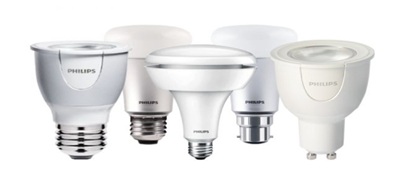
Types Of Bulbs:-

There are three types:

  1. Standard Bulbs: Standard bulbs come with E27 or bayonet fittings.
  2. Candle Bulbs: Candle bulbs with SES (small screw) fittings.
  3. Spotlights: Spotlight bulbs are most commonly GU10 spotlight fittings.

sl

Uses:-

  • Smart lighting is a good way which enables to minimize and save energy by allowing the householder to control remotely cooling and heating, lighting, and the control of appliances.
  • This ability saves energy and provides a level of comfort and convenience. From outside of the traditional lighting industry, the future success of lighting will require involvement of a number of stakeholders and stakeholder communities.
  • The concept of smart lighting also involves utilizing natural light from the sun to reduce the use of man-made lighting, and simple concept of people turning off lighting when they leave a room.


Traffic surveillance

                Arivon Technologies enables to explore the latest trends on TRAFFIC SURVEILLANCE and utilize the maximum benefits of this Technology. Please visit www.arivontech.com  for more details. Contact us sales@arivontech.com .

 VIDEO ACQUISITION ( SURVEILLANCE ):

ts

            Surveillance is the secret observation of people, places and vehicles, which law enforcement agencies and private detectives use to investigate allegations of illegal behavior. These techniques range from physical observation to the electronic monitoring of conversations.

ts1

TRAFFIC CAMERAS:

ts2

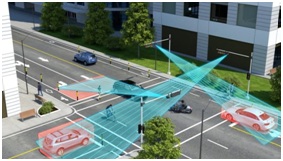
Traffic monitoring cameras typically sit on top of traffic lights and monitor traffic flowing through on the highway. They do not take pictures of vehicles that run red lights or issue citations. Red light cameras are much bulkier and are positioned on the side of the road.

Traffic cameras is an innovative functional use of video surveillance technology.

ADVANCED TRAFFIC MANAGEMENT SYSTEM:

Advance Traffic Management System (ATMS) is provided by Efkon India to ensure safety and reduce travel time. Over the highway, it becomes an absolute necessity to monitor incidents proactively by using modern technologies to minimize the effects of unavoidable disasters.

Advance Traffic Management System aim is to provide traffic management solutions that enable private concessionaires, highway operators or government authorities to take actions for improving the safety of road users and improving the traffic flow, increase transportation system efficiency, economic productivity and mobility.

ATMS is continuously monitors the expressway/ highway stretch providing valuable feedback and information to the Central Control Room to take suitable actions.

EFKON ADVANCE TRAFFIC MANAGEMENT SOLUTIONS BENEFITS:

  • Provide Real–time traffic information.
  • Display dynamic variable message signs, providing warnings to road users.
  • Reduced response time to an accident. This leads to an improved coordination between police and emergency services.
  • Reduced operations and maintenance costs.

VIDEO SURVEILLANCE SYSTEM:

Traffic  signal  light  can be optimized using vehicle  flow  statistics obtained by  Smart Video Surveillance Software  (SVSS). This  research  focuses on efficient traffic control system by detecting and counting the vehicle numbers at various times and locations.

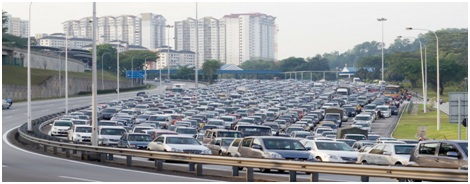
At present, one of the biggest problems in the main city in any  country  is  the  traffic  jam  during  office  hour  and  office  break  hour. Sometimes  we can see the  traffic  signal  green  light  is  still ON  even though  there  is  no  vehicle  coming.  Similarly,  it  is  also  observed  that  long queues  of  vehicles  are  waiting  even  though  the  road  is  empty  due  to  traffic signal light selection without proper investigation on vehicle flow. This can be  handled by adjusting  the vehicle passing  time  implementing by our developed SVSS.

Our Advance Traffic Management System is a indigenously developed and designed specifically for Indian road conditions.

Research, Development and global exposure resulted in integration of latest traffic management system like speed violation, Automatic Number Plate Recognition and video incident detection systems with ATMS.

This State-of-Art system integrates the following main sub-systems into one powerful communication/ information tool for the operations company:

  • Variable Message Signs
  • Video Incident Detection System
  • Meteorological System
  • Automatic Traffic Control and Classification System
  • CCTV (Closed-Circuit Television) Monitoring System
  • Communication Systems
    • Emergency Call Box System
    • Mobile Communication
  • Optical Fiber or GSM based network backbone
  • Command and Control centre

TRAFFIC SURVELLIANCE USING MATLAB AND ARDUINO:

Traffic Cameras capture the image of vehicles in traffic and sends to MATLAB.  Traffic Surveillance System is denoted by way of how the traffic could be controlled over traffic intersection points from the Traffic Control Room. This is a very effective system for Traffic Surveillance.

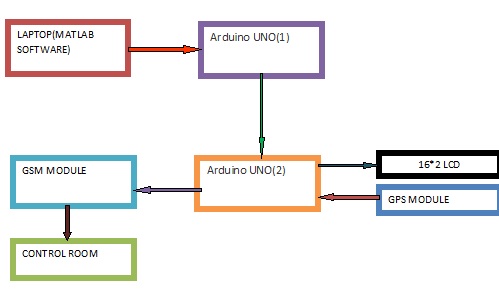
There are two Arduino UNO boards which are used for controlling all the operations.  GPS and GSM technologies are also used. Here GPS is used for taking coordinates of a Traffic Jam and GSM is used for sending these coordinates to Traffic Control Room. But besides GPS and GSM there are two more other important things which are used in the Traffic Surveillance and that are Cameras and MATLAB.

ts3

MATLAB sends command to cameras for capturing the images of traffic, where MATLAB count the total number of vehicles over the Traffic Intersection or over on road. If the total number of vehicles over the road exceeds the limits in a given situation then the MATLAB sends signals to Arduino UNO (1).

Arduino UNO (1) sends interrupt to second Arduino UNO (2). Now the second Arduino UNO (2) takes coordinates of the Traffic Jam and sends these coordinates to the Traffic Control Room using GSM module. LCD for showing the traffic status like Traffic Jam or No Traffic.

Self driving car

Introduction:

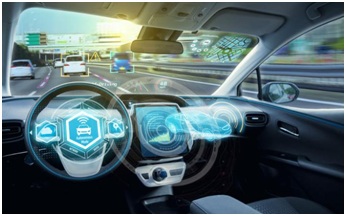
A self-driving car is a vehicle that is capable of sensing its environment and navigating without much human input. Autonomous cars combine a variety of techniques to perceive their surroundings, including radar, laser light, GPS, odometry, and computer vision.

Technology behind on self driving car

There are three technologies

  1. Sensors
  2. Connectivity
  3. software/control algorithms.

Sensors are required for autonomous driving and are used in advanced safety features such as blind-spot monitoring, lane-keep assistance, and forward collision warning. Connectivity means cars have access to the latest traffic, weather, surface conditions, construction, maps, adjacent cars, and road infrastructure, This data is used to monitor a car’s surrounding operating environment to anticipate braking or avoid hazardous conditions. Software/control algorithms are needed to reliably capture the data from sensors and connectivity and make decisions on steering, braking, speed, and route guidance.

sdc

“By far the most complex part of self-driving cars, the decision-making of the algorithms, must be able to handle a multitude of simple and complex driving situations flawlessly”

Two of the most talked about self-driving advancements come from Google and Tesla. They take different approaches: Google is using lidar (a radar-like technology that uses light instead of radio waves) sensor technology and going straight to cars without steering wheels or foot pedals. Tesla has rolled out a software system called Autopilot, which employs high-tech camera sensors as a car’s “eyes,” to some of its cars already on the market.

Benefits of self-driving car

  • Greater Road Safety
  • Greater Independence
  • Saving Money
  • More Productivity
  • Reduced Congestion


Traffic survey

             Arivon Technologies enables to explore the latest trends on Traffic survey and utilize the maximum benefits of this Technology. Please visit www.arivontech.com  for more details. Contact us sales@arivontech.com .

Introduction:

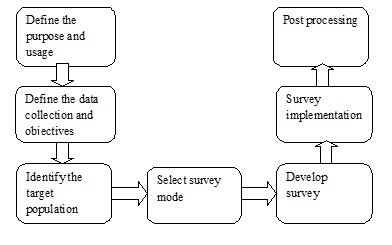
  • Traffic surveys main aim is to capture data that accurately reflects the real-world traffic situation in the area.
  • It counts the number of vehicles using a road or collecting journey time information.
  • In the previous days people standing by the side of roads and recording their observations on paper pads. In recent years, they came up with new approach by recording traffic using video cameras, and then analyzing the video footage later.
  • A traffic surveys can be manual or automatic.

Traffic volume data

  • A traffic survey can include many types of traffic data collection
  1. Pedestrians and bicycle counts
  2. Vehicles counting
  3. Speed data collection
  4. axle weight analyses
  • Traffic is counted automatically during a pre-agreed sample period, usually one week long.
  • Vehicle counts can be classified into different vehicle classes. Depending on counting technology, such classification takes place based on, for example, vehicle length or number of axles and wheelbase information.

Classified volume counts

  • This survey is carried out to understand the variety of vehicles that passes through a day over 24 hours a day.
  • To appreciate traffic characteristic in terms of size, length and axles.

Counting of vehicles

  • Vehicle type
  • Direction
  • 15 min. intervals

Traffic methods:

Two methods are available for conducting traffic volume count

1) Manual Method:

These are mainly visual counts carried out by operator. It is time Consuming.

2) Automatic Method:

There are various devices and software available, which enables easy and Accurate traffic count.

  • Manual method
  • Video photography
  • Using automatic devices like sensors

Purpose of survey

tra sury

Traffic surveys are required to transportation engineers for:

  • Planning and designing traffic facilities
  • Need for traffic control devices
  • Effect of projected strategies
  • Calibrating and validating traffic models etc.

Advantages of road transport

  • Door to door service
  • Flexibility
  • Economical over short distances

Disadvantages of road transport

  • Unsuitable for long distances
  • Limited speed
  • Affected by weather

Conclusion

  • Traffic volume counting should be automatic.
  • In case of manual counting try to keep a hand counting machine.


Web development services

Introduction:         

             Arivon Technologies enables to explore the latest trends on WEB DEVELOPMENT AND SOLUTIONS and utilize the maximum benefits of this Technology. Please visit www.arivontech.com  for more details. Contact us sales@arivontech.com .

Web developers, sometimes called programmers, take the design created and build a fully functioning website. To put it (very) simply, think of the design as a non-interactive picture of a website. Developers take that design and break it up into its components. They then either use just HTML or a more dynamic approach incorporating programming languages such as PHP to develop the various website pages.

Web developers may convert a static layout into a dynamic website by using image and content sliders, active states for links and buttons, and other interactive elements.

BASIC WEB DEVELOPMENT CONCEPTS

                wds         

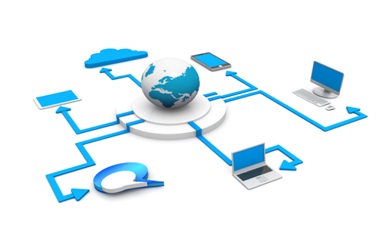
  • Internet: The internet is actually a bunch of computers spread all around the world that talk to each other using all the certain protocols, certain language that is called TCP/IP.
  • WWW: From the internet the WWW (World Wide Web) came out, which is the network of Hyper Text Documents that are linked to each other, what we know as web pages/web sites. In 1990 the first web browser came out it was called WWW. You need a web browser to open websites and web sites are made in a language called HTML.

So the web today has gone quite far from that early beginnings and we have all source of things now like social networks, multimedia, messaging, documents etc. but the basics remain kind of the same in terms of client server model.

Client- Server

wds 1

In the above picture you see a client which is your computer, your web browser that makes a request to the cloud or to the server and you receives from the server a response. When you go to face book you make a request to the face book server asking for the face book page and the server send you back a response which contains files that the actual HTML,CSS files and the images of that face book page and then you enter our login that is sent again to the server as another request and if your login is correct you get the response back and that’s the page which shows your friends and all other things , if your password is wrong you get the response as password is wrong. So this basic introduction is a core element of web development.

CLIENT:

  • Web Browser (Chrome, Internet Explorer, Firefox, etc).
  • Computer, Phone, Tablet, TV.
  • What the user sees (presentation).
  • Receives user input and sends that to the server.

The languages used in the client side

  • HTML
  • CSS
  • Java Script(JS)

SERVER:

  • A computer in a datacenter.
  • The cloud.
  • Databases.
  • Business logics.
  • Data validation.
  • Languages: PHP, Java, Python, Ruby, JavaScript and more.

Some Server functions:

  • User accounts
  • Login/Logout
  • Saving data, photos, files
  • Creating, Editing, Deleting records.

HTML5: It is a latest specification of HTML and it takes HTML to a whole new level. Using this you can create not only websites and also all sources of apps mobile apps, TV apps and Games.


What is Security testing ?

Introduction:   

           Arivon Technologies enables to explore the latest trends on Security Testing and utilize the maximum benefits of this Technology. Please visit www.arivontech.com  for more details. Contact us sales@arivontech.com .

What is Security Test?

  • It is a technique of testing used to find if a software system protects data and maintains functionality and it is also used to find unshielded, security infringements and weak spots in a software system.
  • It is also called as Perforation testing and Pen test.
  • Security Testing Means assessing various components of security overlaying integrity, confidentiality, legitimacy and

Why Security Testing is Important?

  • It makes sure that system and applications in an establishment, are free from any aperture that may affect the system.
  • It is used to recognize the threats in the software system and estimate its prospective vulnerabilities.
  • It restricts the unlicensed access and it helps that unlicensed access is admitted to protect data.
  • Nowadays there is high probability of data stealing by hackers so all of them distraught about the security of the data, but the software testing companies helping the people by doing several testing techniques.

Security Testing types:

Vulnerability Scanning: This technique helps to find out the weak spots in a Software System

Security Scanning: This type of security technique is used to identify problems in web applications

Penetration Testing: It is also called pen test, Important testing in the Security Testing. It tests the system, network or web applications to identify the weak spots that a hacker could utilize.

Risk Assessment: This type of security testing helps the enterprises and organizations to proactive policy of control workplace risks.

Security Auditing: This security audit is helps companies to evaluate the company’s data by measuring how well it structured.

Ethical Hacking: This type of hacking is used by technical experts instead of owners to penetrate system or a network to identify the security problems that a hacker already exploits.

Posture Assessment: It is a methodology to converts a company risk management capabilities


Data Mining


Introduction :

Arivon Technologies enables to explore the latest trends on DATA MINING and utilize the maximum benefits of this Technology. Please visit www.arivontech.com  for more details. Contact us sales@arivontech.com .

Data mining is defined as the process of extracting information from large set of data. In other ways we can say that data mining is mining knowledge from data.

The extracted information or knowledge can be used for some application are,

  • Production Control
  • Science Exploration
  • Market Analysis
  • Fraud Detection
  • Customer Retention

DATA MINING KNOWLEDGE DISCOVERY:

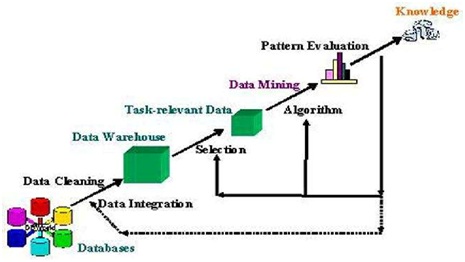
Here in data mining knowledge discovery we have different type of steps such as,

  • Data Cleaning: In first step, the process removing noise and inconsistent data.
  • Data Integration: In second step, the process of combining multiple data sources.
  • Data Selection: In third step, the process of retrieving relevant data to the task analysis from database.
  • Data Transformation: In fourth step, the process of performing aggregation operations to transformed data into appropriate forms for mining.
  • Data Mining: In fifth step, to extract data patterns we applied intelligent methods.
  • Pattern Evaluation: In sixth step, data patterns are evaluated.
  • Knowledge Presentation: In seven step, knowledge is represented.

DATA MINING

Fig: diagram for data mining knowledge discovery

DATA MINING SYSTEM CLASSIFICATION:

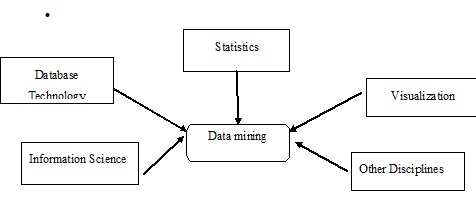
Here in data mining system classification we have so types such as,

  • Statistics
  • Machine Learning
  • Database Technology
  • Information Science
  • Visualization
  • Other Disciplines

DATA MINING 1 

Fig: diagram for data mining system classification

Data mining is not an easy process, because these algorithms used can get very difficult and data is not available at same place it will available in different places. so it needs to be included from different heterogeneous data sources. These may create some problems. Here in this we have some major issues there such as

  • Mining Methodology and User Interaction
  • Performance Issues
  • Diverse Data Types Issues

Mining methodology and user interaction:

  • Mining different kinds of knowledge in databases
  • Interactive mining of knowledge at multiple levels of abstraction
  • Ad hoc data mining and Data mining query languages
  • Incorporation of background
  • Pattern evaluation
  • Visualization and Presentation of data mining results
  • Handling noisy or incomplete data

Performance Issues:

  • Parallel, distributed, and incremental mining algorithms.
  • Scalability and Efficiency of data mining algorithms.

Diverse Data Types Issues

  • Mining information from different databases and global information systems.
  • Handling of relational and complex types of data.

There are mainly two categories of functions concerned in Data Mining such as Descriptive, Classification and Prediction

 Descriptive Function

It is deals with the common properties of data in the database. Some descriptive functions are

  • Class/Concept Description
  • Mining of Frequent Patterns
  • Mining of Associations
  • Mining of Correlations
  • Mining of Clusters

Class/Concept Description

Class/Concept refers to the data to be associated with the classes or concepts. There are two functions in class/concept description such as

  • Data Characterization: It refers to summarizing data of class under study.
  • Data Discrimination: the process of classification or mapping of a class with some predefined group or class.

Mining of Frequent Patterns

Mining of frequent patterns will occur frequently in transactional data. some frequent patterns are such as

  • Frequent Item Set: this one refers a set of items occurs together frequently.
  • Frequent Subsequence: it refers the sequence of patterns occurs frequently.
  • Frequent Sub Structure: it provides dissimilar structural forms.

Mining of Association

Associations are used in retail sales to identify patterns that are frequently purchased together. The process of detecting the relationship among data and determining association rules.

Mining of Correlations

Correlations is defined as the relations between two item sets to analyze that if they have positive, negative or no effect on each other.

Mining of Clusters

Cluster is defined as it is a process of forming a group of objects that are very similar.

Classification and Prediction

It is the process of finding a model that describes the concepts or data classes. based on the analysis of sets of training data it will derived. It is having different functions such as

  • Classification (IF-THEN) Rules
  • Decision Trees
  • Mathematical Formulae
  • Neural Networks