Smart lighting

            Arivon Technologies enables to explore the latest trends on Smart Lighting and utilize the maximum benefits of this Technology. Please visit www.arivontech.com  for more details. Contact us sales@arivontech.com .                                      

SMART LIGHTING

            The combination of smart lights and software program used to set up configuring an installation as to behave as you want when an event occurs.

            It is a lighting technology designed for energy efficiency. This may include high efficiency fixtures and automated controls that make adjustments based on conditions such as occupancy or daylight availability. Lighting is the deliberate application of light to achieve some aesthetic or practical effect

Working:

            Smart lighting generally uses mesh networking, where each smart bulb wirelessly connects to its nearest one. That network is controlled by a hub that plugs into your router, enabling your other networked devices – such as your phone or tablet – to communicate with your bulbs.

            You’ll often find that smart light systems can also be accessorized with additional items such as dimmer switches or motion detectors, and in some cases they can be linked to the service to create complex rules that trigger particular recipes for particular things.

Uses:

  • Smart lighting is a good way which enables to minimize and save energy by allowing the householder to control remotely cooling and heating, lighting, and the control of appliances.
  • This ability saves energy and provides a level of comfort and convenience. From outside of the traditional lighting industry, the future success of lighting will require involvement of a number of stakeholders and stakeholder communities.
  • The concept of smart lighting also involves utilizing natural light from the sun to reduce the use of man-made lighting, and simple concept of people turning off lighting when they leave a room.
Facial recognition

             Arivon Technologies enables to explore the latest trends on Facial Recognition and utilize the maximum benefits of this Technology. Please visit www.arivontech.com  for more details. Contact us sales@arivontech.com .

Facial Recognition

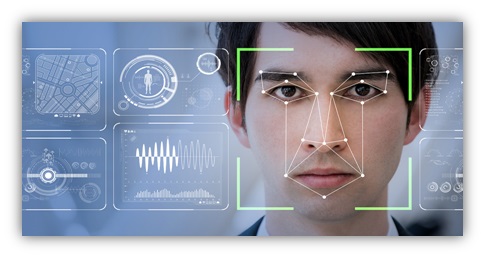
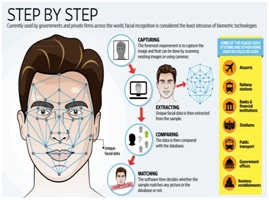
            Face recognition describes a biometric technology that attempts to establish an individual’s identity. Also known as facial recognition or face detection, the process works using a computer application that captures a digital image of an individual’s face (sometimes taken from a video frame) and compares it to images in a database of stored records.

FA1

How Facial Recognition Systems Work:

            Anyone who has seen the TV shows “Las Vegas” has seen facial recognition software in action. In any given episode, the security department at the fictional Montecito Hotel and Casino uses its video surveillance system to pull an image of a card counter, thief or blacklisted individual. It then runs that image through the database to find a match and identify the person. By the end of the hour, all bad guys are escorted from the casino or thrown in jail. But what looks so easy on TV doesn’t always translate as well in the real world.

FA2

         The Police Department in many countries has installed  cameras equipped with facial recognition technology in their Cities to cut down on crime in the area.


IIOT

            Arivon Technologies enables to explore the latest trends on Industrial Internet of Things and utilize the maximum benefits of this Technology. Please visit www.arivontech.com  for more details. Contact us sales@arivontech.com .

Industrial internet of things (IIoT):

What is Industrial Internet of Things?

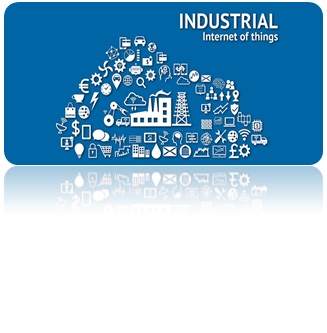
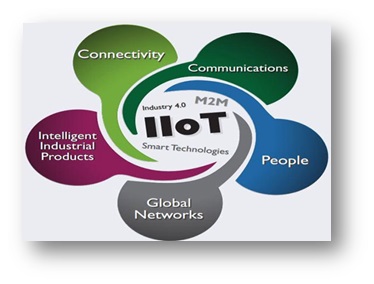
            Internet of Things no more needs any introduction. When these IoT capabilities are implemented in the Industrial and Manufacturing space, it becomes Industrial IoT. This technology is an amalgamation of different technologies like machine learning, big data, sensor data, M2M communication, and automation that have existed in the industrial backdrop for many years.

IIOT 1

Evolution of IIoT:

Industry 1.0 (1784) :

  • The invention of steam engines kick started the Industry 1.0. However, the manufacturing was purely labor oriented and tiresome.

Industry 2.0 (1870):

  • The first assembly line production was introduced. This invention was a big relief for the workers as their labor was minimized to the possible extent.

Industry 3.0 (1969):

  • Involved advancement of electronic technology and industrial robotics.

Industry 4.0 (2010) :

  • The vision of connected enterprise through interconnecting industrial assets through the internet was fulfilled with the introduction of Industry 4.0.

IIOT 2

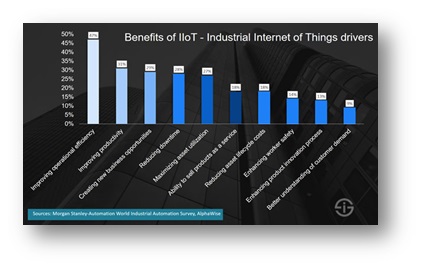
Advantages of Industrial IoT:

  • Predictive & Proactive maintenance.
  • Real-Time Monitoring.
  • Asset/Resource Optimization.
  • Remote Diagnosis.

Drivers of IIoT:

IIOT 3

  • Technology: Smart Sensors, Robotics & Automation, Augmented/Virtual reality, Big Data Analytics, Cloud Integration, Software applications, Mobile, Low power Hardware devices and    Scalability of IPv6-3.4X 10^38 IP address, etc.
  • Customer Behavior: The edge that IIoT gives to enterprises over their competitor helps them achieve better customer satisfaction and retention through value addition.
  • Macro-Economic Drivers: Government policies like Industry 4.0, Smart Factories, Make In India, Make In China 2025 & Smart Cities, Japan’s Industrial Value Chain Initiative Foum, Support of Green initiatives, Rising Energy & crude oil prices, Favorable FDI policies, Policies by regulatory bodies, etc.

Industrial Internet of Things: The Magic wand for the Economy:

            The endless unfolding of new technologies have added up to a huge list of the “Next Big Thing”. However not every evolving technology has the potential to break through the business and social landscape.

Industrial IoT Applications:

            Industrial Internet of Things (IIoT) is an ever growing and rapidly increasing sector that accounts for most of the share of IoT spending in the global market.

IIOT 4

  • Digital/Connected Factory.
  • Facility Management.
  • Production Flow Monitoring.
  • Inventory Management.
  • Plant Safety and Security.
  • Quality Control.
  • Packaging Optimization.
  • Logistics and Supply Chain Optimization.

Sports Artificial Intelligence

            Arivon Technologies enables to explore the latest trends on Sports Artificial Intelligence and utilize the maximum benefits of this Technology. Please visit www.arivontech.com  for more details. Contact us sales@arivontech.com

Sports Artificial Intelligence

Artificial Intelligence is defined as  oftware that is capable of making its own conclusions on the way of reaching a goal,which is having a lot of applications in sports ,studying people movements and sports and player analysis and training . Many sports teams/brands already use AI as a tool. Artificial intelligence can autonomously:

SAI

  • Study player data and generate player specific context
  • Planning sports strategies and playground ,study and analyse teams and matches,
  • track player performance on the ground and training
  • track athlete performance, improve health and prevent fatigue or injury.

Internet applications

            Arivon Technologies enables to explore the latest trends on Internet Applications and utilize the maximum benefits of this Technology. Please visit www.arivontech.com  for more details. Contact us sales@arivontech.com .

Internet Applications

What does it mean-Internet Applications?

            The internet is a globally connected network system that uses TCP/IP to transmit data via various types of media. The internet is a network of global exchanges – including private, public, business, academic and government networks – connected by guided, wireless and fiber-optic technologies.

IA 1

            The terms internet and World Wide Web are often used interchangeably, but they are not exactly the same thing; the internet refers to the global communication system, including hardware and infrastructure, while the web is one of the services communicated over the internet.

Internet applications:

            We can roughly separate internet applications into the following types: online media, online information search, online communications, online communities, online entertainment, e-business, online finance and other applications.

Applications of internet:

            The internet is treated as one of the biggest invention. It has a large number of uses.

IA 2

  • Communication
  • Job searches
  • Finding books and study material
  • Health and medicine
  • Travel
  • Entertainment
  • Shopping
  • Stock market updates
  • Research
  • Business use of internet: different ways by which internet can be used for business are:

Information about the product can be provided can be provided online to the the customer.

  • Provide market information to the business
  • It help business to recruit talented people
  • Help in locating suppliers of the product.
  • Fast information regarding customers view about companies product
  • Eliminate middle men and have a direct contact with contact with customer.

Internet applications:

  • Network connection
    • Network managers
    • VPN clients
    • Proxy servers
    • Anonymizing networks
  • Web browsers
    • Console
    • Graphical
  • Web servers
  • ACME clients
  • File sharing
    • Download managers

                              1 .Console

                               2 .Graphical

    • Cloud storage servers
    • Cloud synchronization clients
    • FTP

                           1 .FTP clients

2 .FTP servers

    • clients Graphical
    • networks Paste
  • Communication
    • Email clients
  1. Console
  2. Graphical
  • Mail servers
  • Mail retrieval agents
  • Instant messaging clients
  1. SIP clients
  2. Matrix clients
  3. Tox clients
  4. Server less (decentralized) clients
  5. Other IM clients
  • Instant messaging servers
  1. IRC servers
  2. XMPP servers
  3. SIP servers
  4. Other IM servers
  • Collaborative software


What is Smart meter ?

            Arivon Technologies enables to explore the latest trends on Smart meter and utilize the maximum benefits of this Technology. Please visit www.arivontech.com  for more details. Contact us sales@arivontech.com .

Smart Meter

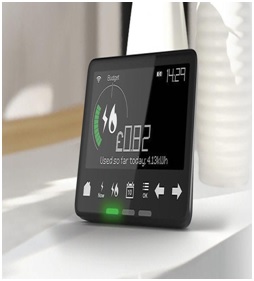
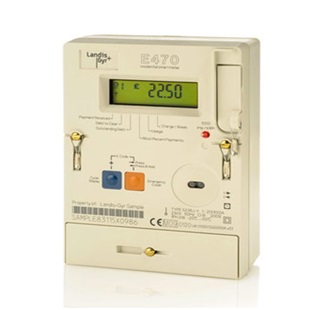
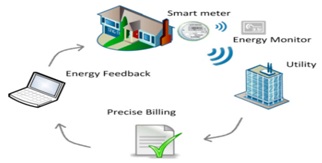
          A smart meter is an electronic device that records consumption of electric/any energy and communicates the information to the electricity supplier for monitoring and billing.

sm 1

sm 2

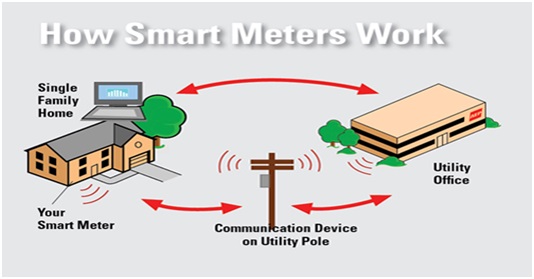
How smart meters work:

sm 3

            Smart meter replace your old gas and electric meters and take automatic and accurate readings which you can see in pounds and pence on your in home display. You’ll be able to monitor your energy  use and only pay for what you use.


Applications of smart meters :

sm 4

  • Services for monitoring and improving energy efficiency of end use and dispersed generation, Customer information feedback.
  • End use energy management.
  • Tariff Setting (Time of Use, Maximum Demand, Seasonal).
  • Energy Saving.
  • Demand response for electricity market and for network operation support, peak load limitation.
  • Smart homes, home automation, remote control of appliances by customer.
  • Connect, disconnect, limit load remotely.
  • Load analysis, modelling and forecasting (for energy markets, network operation and planning, energy saving etc.).
  • Settlement and billing.
  • Virtual Power Plant, embedded renewables and cogeneration.
  • Improving competition and efficiency in energy markets.
  • Fraud detection.
  • Providing information for authorities and researchers.
  • Meter management.
  • State estimation of power distribution networks.
  • Monitoring of power quality and reliability.

IOT

          Arivon Technologies enables to explore the latest trends on Internet of things   and utilize the maximum benefits of this Technology. Please visit www.arivontech.com  for more details. Contact us sales@arivontech.com .

Internet of things (IoT)

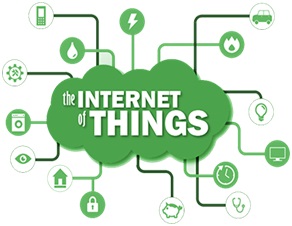
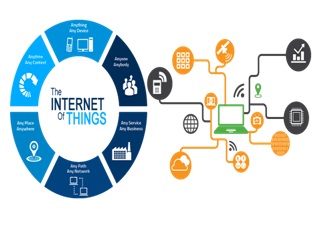
         The Internet of things (IoT) is the network of physical devices, vehicles, home appliances, and other items embedded with electronicssoftwaresensorsactuators, and connectivity which enables these things to connect, collect and exchange data, creating opportunities for more direct integration of the physical world into computer-based systems, resulting in efficiency improvements, economic benefits, and reduced human exertions.

iot 1

iot 2

How does IoT work?

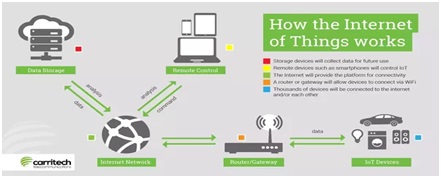
         The Internet of Things (IoT), also sometimes referred to as the Internet of Everything (IoE), consists of all the web-enabled devices that collect, send and act on data they acquire from their surrounding environments using embedded sensors, processors and communication hardware.

iot 3

Applications:

1. Smart home

         Smart Home clearly stands out, ranking as highest Internet of Things application on all measured channels. More than 60,000 people currently search for the term “Smart Home” each month.

2. Wearables

        Wearables remains a hot topic too. As consumers await the release of Apple’s new smart watch in April 2015, there are plenty of other wearable innovations to be excited about

3. Smart City

         Smart city spans a wide variety of use cases, from traffic management to water distribution, to waste management, urban security and environmental monitoring

4. Smart grids

        Smart grids is a special one. A future smart grid promises to use information about the behaviors of electricity suppliers and consumers in an automated fashion to improve the efficiency, reliability, and economics of electricity.

5. Industrial internet

         The industrial internet is also one of the special Internet of Things applications.

6. Connected car

        The connected car is coming up slowly.

7. Connected Health

        Connected health remains the sleeping giant of the Internet of Things applications.

8. Smart retail

         Proximity-based advertising as a subset of smart retail is starting to take off.

9. Smart supply chain

         Supply chains have been getting smarter for some years already.

10. Smart farming

         Smart farming is an often overlooked business-case for the internet of Things because it does not really fit into the well-known categories such as health, mobility or industrial.

Test automation

       Arivon Technologies enables to explore the latest trends on Test Automation  and utilize the maximum benefits of this Technology. Please visit www.arivontech.com  for more details. Contact us sales@arivontech.com .

 Test Automation:

What is Test Automation?

       Software Test automation makes use of specialized tools to control the execution of tests and compares the actual results against the expected result. Usually, regression tests, which are repetitive actions, are automated.

       Testing Tools not only helps us to perform regression tests but also helps us to automate data set up generation, product installation, GUI interaction, defect logging, etc. Automation tools are used for both Functional and Non-Functional testing.

ta1


Why Automated Testing?                         

          Every software development group tests its products, yet delivered software always has defects. Test engineers strive to catch them before the product is released but they always creep in and they often reappear, even with the best manual testing processes. Test Automation software is the best way to increase the effectiveness, efficiency and coverage of your software testing.

Benefits of Automation Testing:

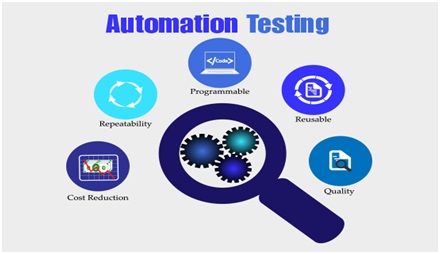
  • Fast:Runs tests significantly faster than human users.
  • Repeatable:Testers can test how the website or software reacts after repeated execution of the same operation.
  • Reusable:Tests can be re-used on different versions of the software.
  • Reliable:Tests perform precisely the same operation each time they are run thereby eliminating human error.
  • Comprehensive:Testers can build test suites of tests that covers every feature in software software application.
  • Programmable:Testers can program sophisticated tests that bring hidden information.

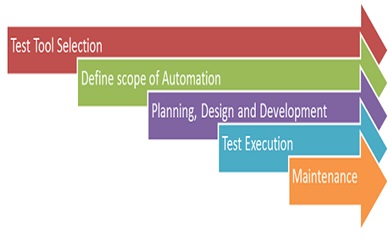
Step Automation Testing Process to Start Test Automation:

ta2

Step 1. Convince the Management

Step 2. Finding Automation tool experts

Step 3. Using the correct tool for automation

Step 4. Analyzing various applications to determine those which are best suited for automation

Step 5. Training the Team

Step 6. Creating the test automation Framework

Step 7. Developing an Execution Plan

Step 8. Writing Script

Step 9. Reporting

Step 10. Maintenance of Scripts

Smart city

         Arivon Technologies enables to explore the latest trends on smart city and utilize the maximum benefits of this Technology. Please visit www.arivontech.com  for more details. Contact us sales@arivontech.com .

SmartCity Definition:

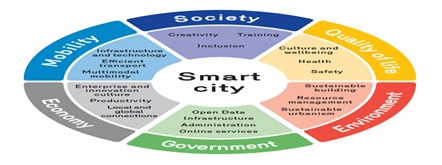
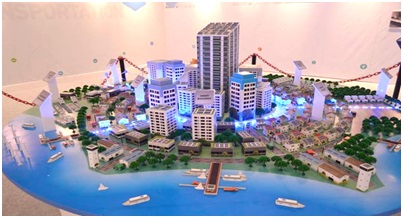
         A smart city is a designation given to a city that incorporates information and communication technologies (ICT) to enhance the quality and performance of urban services such as energy, transportation and utilities in order to reduce resource consumption, wastage and overall costs. The overarching aim of a smart city is to enhance the quality of living for its citizens through smart technology.

sc1

sc2

Smart City Features:

  • Some typical features of comprehensive development in Smart Cities are described below.
  • Promoting mixed land use in area based developments–planning for ‘unplanned areas’ containing a range of compatible activities and land uses close to one another in order to make land use more efficient.
  • Housing and inclusiveness – expand housing opportunities for all;
  • Creating walkable localities –reduce congestion, air pollution and resource depletion, boost local economy, promote interactions and ensure security.
  • Preserving and developing open spaces – parks, playgrounds, and recreational spaces in order to enhance the quality of life of citizens, reduce the urban heat effects in Areas and generally promote eco-balance;
  • Promoting a variety of transport options – Transit Oriented Development (TOD), public transport and last mile para-transport connectivity;

 Smart  cities . Why?

         Smart cities affect everyone, whether directly or indirectly. People who live in smart cities or who are visiting smart cities have the immediate benefit of being connected to the governing body for information and services. The quality of their lives can be improved with better traffic management, waste removal, snow removal, and more. Those who don’t live or visit a smart city are affected simply because of the lack of connected services and communication available to them.

Top 10 Smart cities in the world

  1. New York City, United States
  2. San Francisco, United States
  3. London, United Kingdom
  4. Paris, France
  5. Stockholm, Sweden
  6. Tokyo, Japan
  7. Amsterdam, Netherlands
  8. Boston, United States
  9. Vienna, Austria
  10. Seoul, South Korea

Traffic counting

          Arivon Technologies enables to explore the latest trends on Traffic counting and utilize the maximum benefits of this Technology. Please visit www.arivontech.com  for more details. Contact us sales@arivontech.com .

TRAFFIC COUNTING

           Traffic counting is the count of vehicles or pedestrians, which is conducted along through road. This count is known as “Traffic Count”.

Types of counting:-

  1. Manual Count:- The count is conducted by persons standing at the roadside and recording passing vehicles on a form, is known as “manual traffic count.
  2. Automation Count:- The count conducted by machines that can record passing vehicles automatically, which are known as “automatic traffic counts”.

Interval of Traffic count:-

  1. Hourly pattern:The way traffic flow characteristic varies throughout the day and night.
  2. Daily Pattern:The day-to-day variation throughout the week.
  3. Monthly and yearly Pattern:The season-to-season variation throughout the year.

Types of vehicles:-

  1. Car:-
  • Number of Axles: 2.
  • All Sides Glasses: Front Side, Back Side, Driver Left Side, Driver Right Side, Passenger Left Side (Behind Driver), Passenger Right Side (Behind Driver).
  1. LGV:-
  • Number of Axles – 2 or 3.
  • Capacity – Less than 3.5T.
  • Back to Driver – No Glasses and No Windows.
  • Vehicle with Embedded trolley.
  • Front Glass (Driver Glass) – Slope.
  • Back side Glass – Yes or No.
  • Driver’s Left, Right and Front side Glasses will be there.
  1. OGV1:-
  • Total Number of Axles – 2 or 3.
  • Front Glass – Slope or Flat.
  • Capacity – More than 3.5T.
  • Back Tyre – May be Hollow.
  1. OGV2:-
  • Number of Axles – More than 3 Axles.
  • No Flat or Slope concept.
  1. Bus:-
  • All Sides Glasses.
  • Bigger Windows with more than 16+ Passengers.
  1. Motor Cycle:-
  • 2 Wheeler with Motor.
  1. Cycle:-
  • 2 Wheeler with Pedal.

Uses:-

  • By counting we can identify the hourly distribution of vehicles at peak hour.
  • We can improve controlling traffic.
  • We can track the route taken by vehicle.